
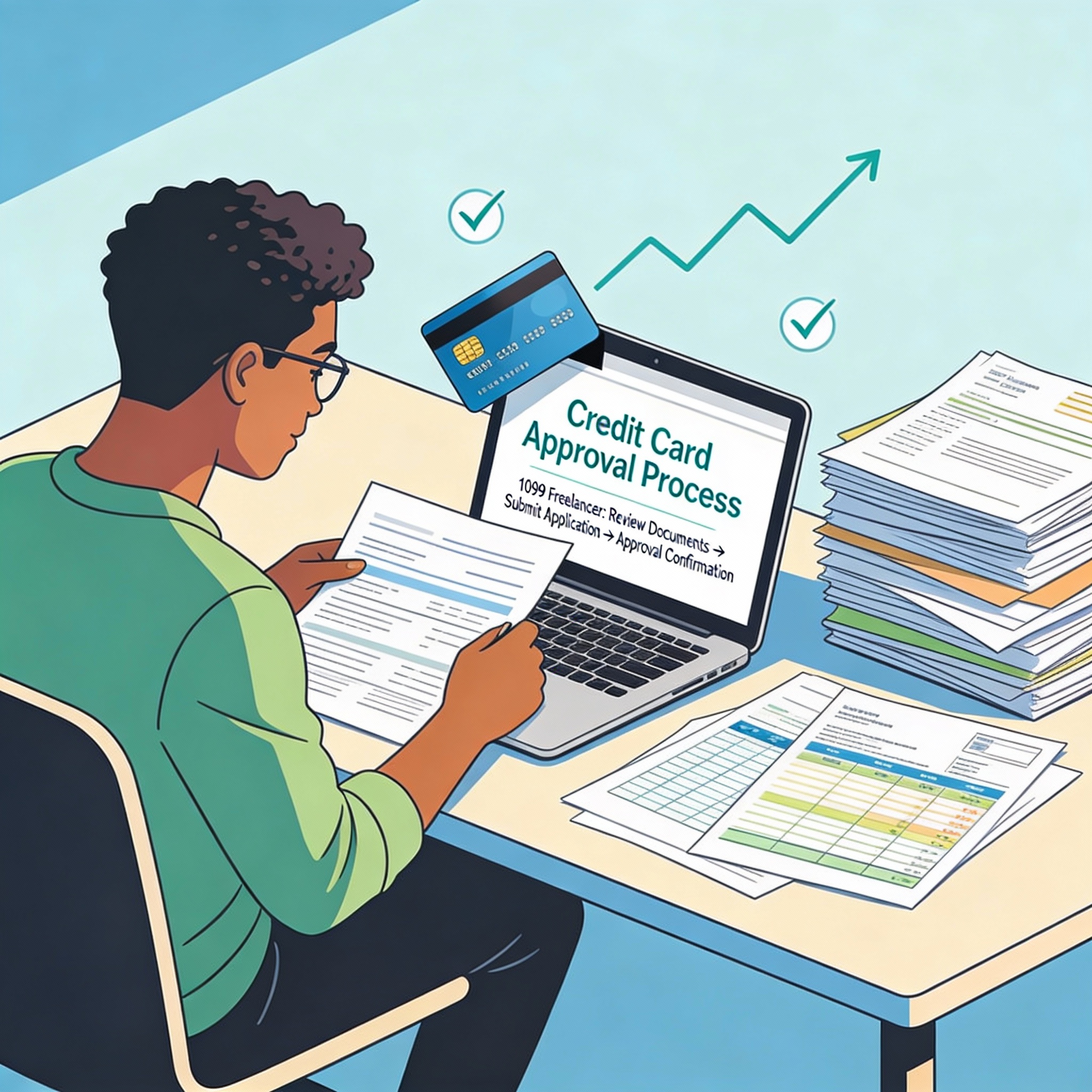
A Practical, No‑Nonsense Guide for Freelancers and Gig Workers in the US
Credit card approval for 1099 income works differently than it does for traditional W‑2 earners.. The process looks the same on the surface, but behind the scenes, banks evaluate 1099 income differently than traditional W‑2 salaries.
That doesn’t mean approval is harder—or unfair. It simply means issuers focus more on patterns, history, and sustainability instead of a single paycheck.
This guide explains credit card approval for 1099 income in simple terms really works for 1099 earners, what banks look for, and how to position yourself honestly and effectively.
What Is 1099 Income and Why Banks View It Differently
1099 income is non‑employee income reported to the IRS by clients or platforms. It includes freelancing, consulting, gig work, and independent contracting.
From a bank’s perspective, the main difference is variability.
W‑2 income suggests predictable pay.
1099 income can change month to month.
Because of this, banks rely less on employer verification and more on your financial track record.
How Credit Card Approval for 1099 Income Is Evaluated
Credit Score Comes First
Your credit score is the strongest approval signal—for everyone.
- Around 680+ is often the baseline
- 720–750+ improves limits and terms
For 1099 earners, a clean payment history matters even more because it shows reliability despite income fluctuations.
Stated Income vs Verified Income (Important Truth)
Most credit card applications do not verify income at the time you apply. Issuers rely on stated income and automated “ability‑to‑pay” checks. The Consumer Financial Protection Bureau explains how lenders assess a borrower’s ability to repay.
However, banks can verify income later if something triggers a review.
Best way to calculate income:
Use a two‑year average of net self‑employment income (Schedule C).
This aligns with how banks think and avoids problems later.
How Banks Evaluate Approval Factors for 1099 Earners
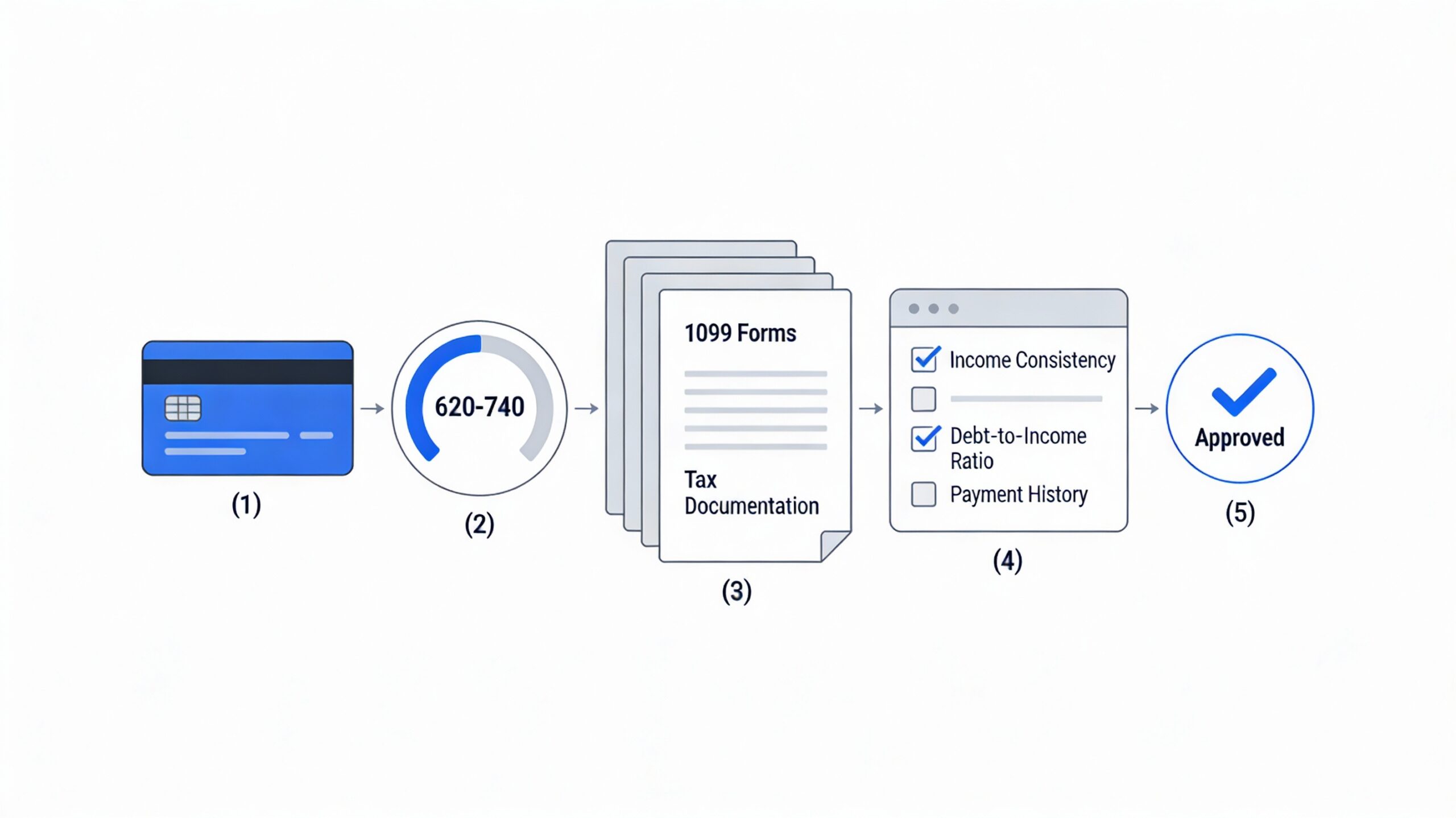
Banks look at multiple signals together, not just income alone. A strong profile balances credit history, income consistency, and debt levels.
What Matters Most for Credit Card Approval for 1099 Income
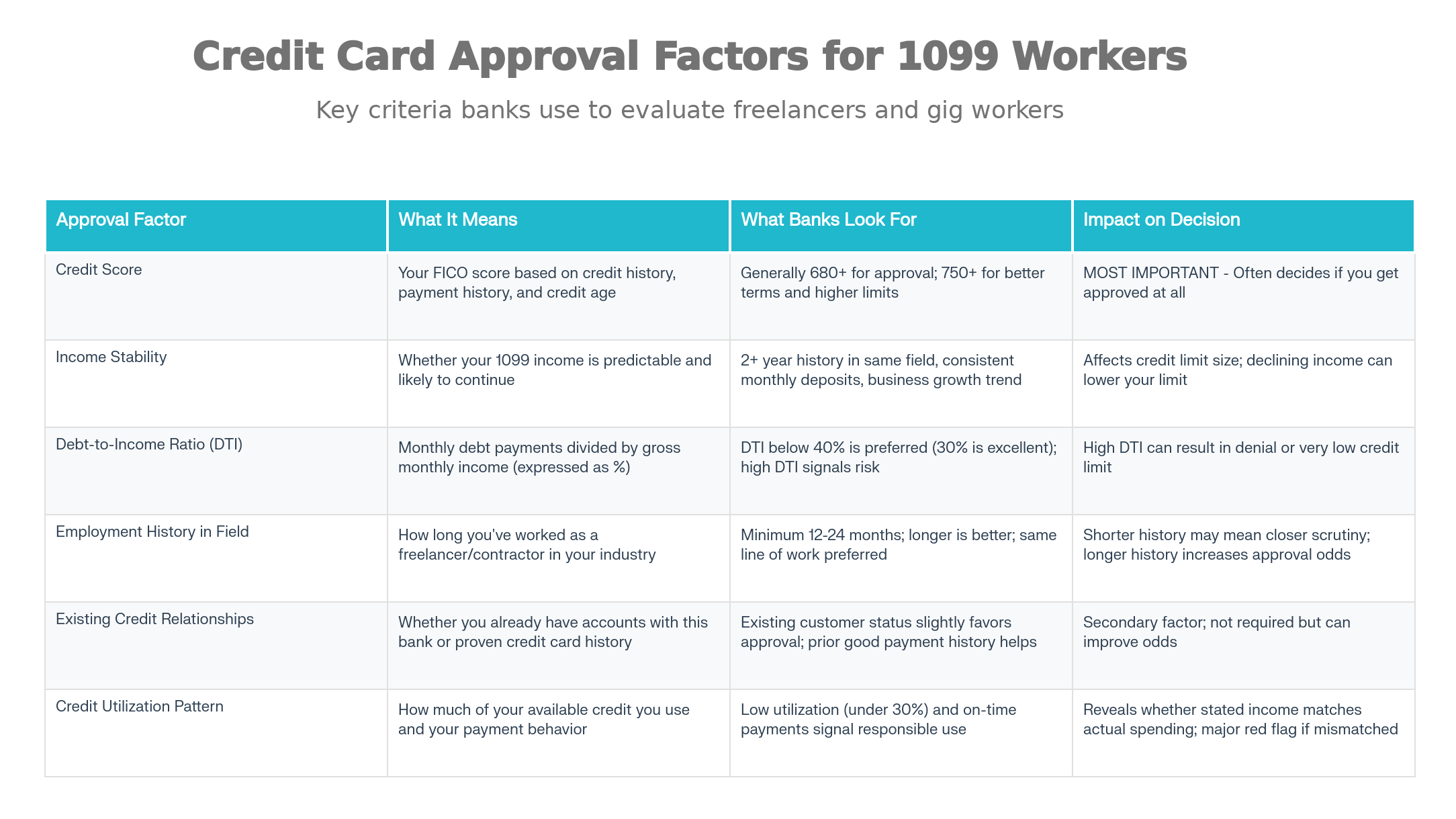
Credit score and debt‑to‑income ratio usually matter more than raw income size. Someone earning less but managing credit well often beats someone earning more with messy finances.
When Banks Actually Verify 1099 Income
According to IRS guidance on self‑employment income, lenders may rely on tax records when income verification is required.
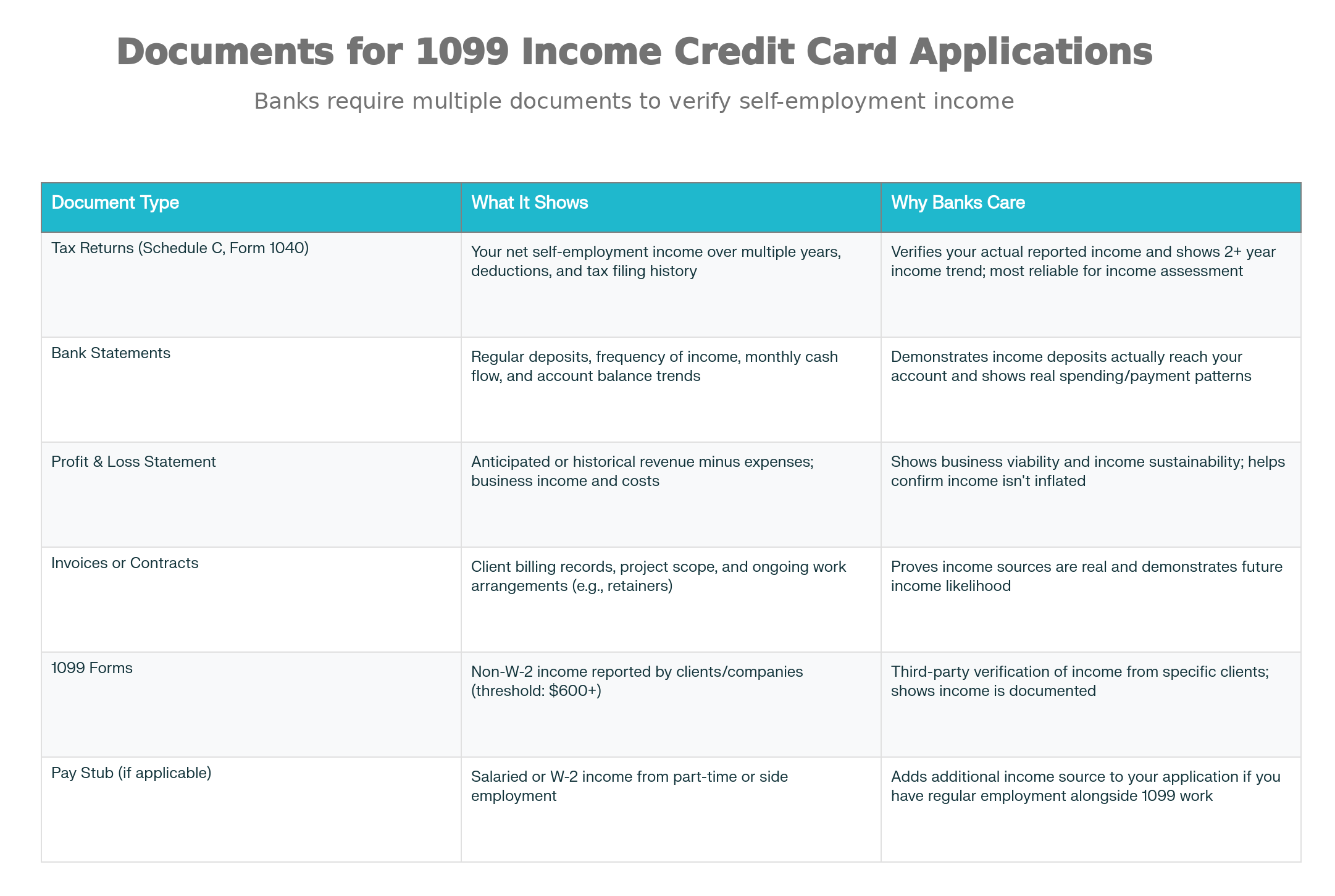
Income verification usually happens after approval, not before.
Common triggers include:
- Requesting a credit‑limit increase
- Spending patterns that don’t match stated income
- Periodic account reviews
Documents typically requested:
- Tax returns (Form 1040 + Schedule C)
- Bank statements
- Profit & loss statements
W‑2 vs 1099 Income: How Approval Really Differs
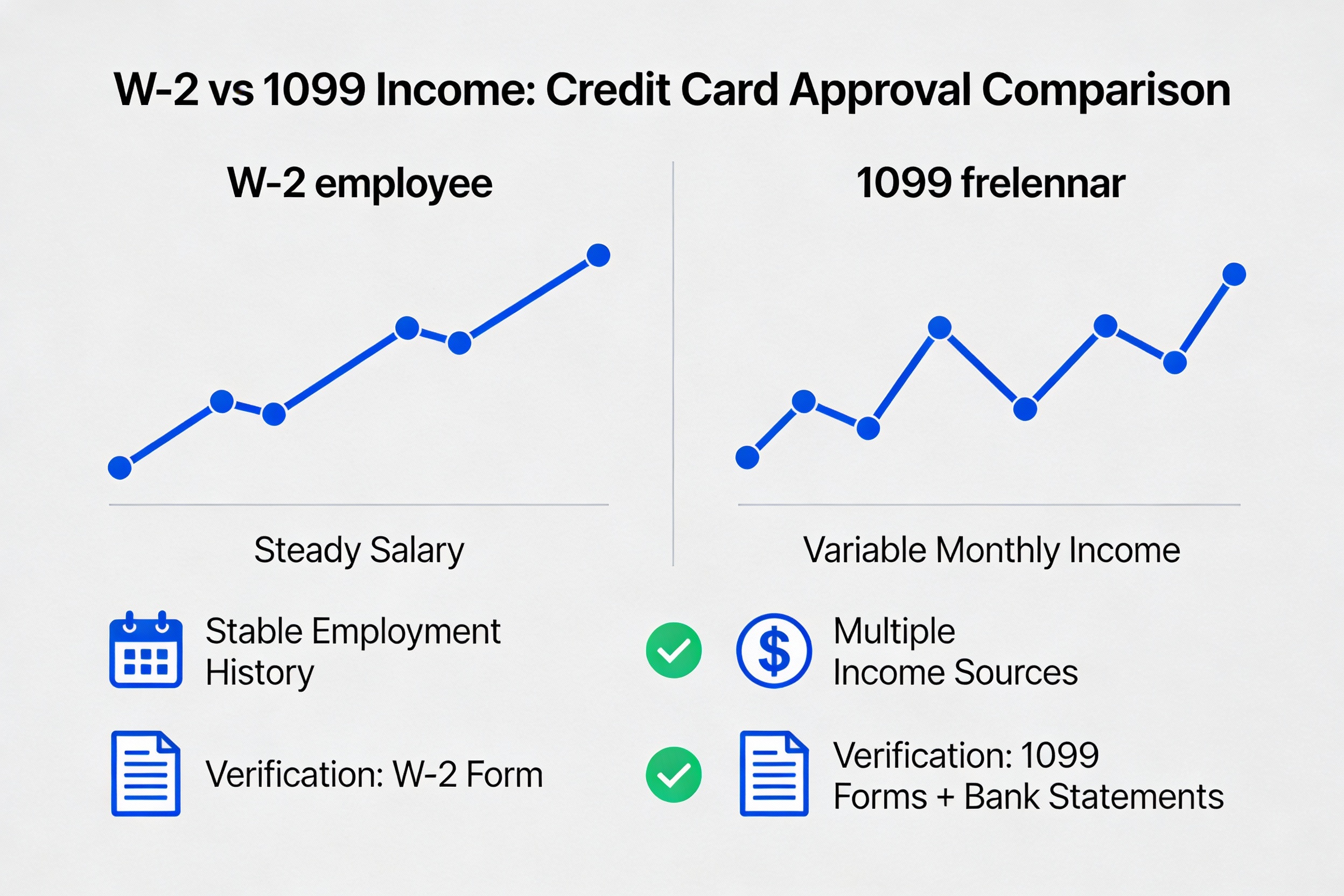
W‑2 income signals stability.
1099 income signals flexibility—but requires proof of sustainability.
Neither is “better.” They’re just evaluated differently.
Common Myths About 1099 Credit Card Approval
Myth: You need an LLC
Reality: Sole proprietors are approved all the time.
Myth: No paycheck = no approval
Reality: History matters more than pay stubs.
Myth: You should inflate income
Reality: That’s risky and unnecessary.
What NOT to Do (Very Important)
Never knowingly misrepresent income.
If a bank later verifies and finds major mismatches, accounts can be closed and balances demanded immediately.
Honest, reasonable estimates are safe. Big exaggerations are not.
Practical Tips Before You Apply
- Calculate income using a two‑year average
- Check credit score first
- Keep debt‑to‑income under control
- Apply with banks you already use
- Keep tax and bank records organized
Final Takeaway
credit card approval for 1099 income is real income. Banks know this.
Approval isn’t about perfection—it’s about patterns, honesty, and preparation.
If you manage credit responsibly and report income accurately, approval is realistic and repeatable.
You may also want to read our main guide on credit card approval for 1099 income for freelancers and gig workers.
Frequently Asked Questions (FAQs)
Can freelancers and gig workers get approved for credit cards?
Yes. Freelancers, independent contractors, and gig workers regularly get approved for credit cards. Banks do not reject applicants simply because they earn 1099 income. Approval depends on factors like credit score, income history, and debt levels—not employment type.
Do credit card companies verify 1099 income during the application?
Usually, no. Most credit card issuers rely on stated income when you apply. However, they may request income verification later if you apply for a credit‑limit increase, show unusual spending patterns, or go through a financial review.
How should I calculate my income on a credit card application as a 1099 earner?
The safest method is to use your average monthly net income based on the last two years of tax returns (Schedule C). This aligns with how banks assess income and reduces the risk of issues if verification is requested later.
Is 1099 income considered riskier than W‑2 income?
From a lender’s perspective, 1099 income is more variable, not necessarily riskier. Banks focus on consistency over time. Freelancers with stable income history and strong credit profiles are often approved just as easily as W‑2 employees.
Can I get a credit card without forming an LLC or business entity?
Yes. You do not need an LLC or corporation to qualify. Most freelancers apply as sole proprietors using their personal name and Social Security number, and approvals are based on personal credit history.
What credit score is recommended for 1099 credit card approval?
A score around 680 or higher improves approval odds for most cards. Higher scores (720+) typically qualify for better limits and rewards, regardless of whether income is W‑2 or 1099.
Is it okay to estimate income on a credit card application?
Reasonable estimates are acceptable, but knowingly overstating income is risky and can lead to account closure if verified later. It’s best to report income figures that align with your tax records.
Want a Complete Overview?
If you’re looking for a broader explanation of how credit cards work for gig workers and freelancers, read our complete guide here: