
Bank Statements vs Tax Returns Credit Card Approval: Complete Guide (2026)
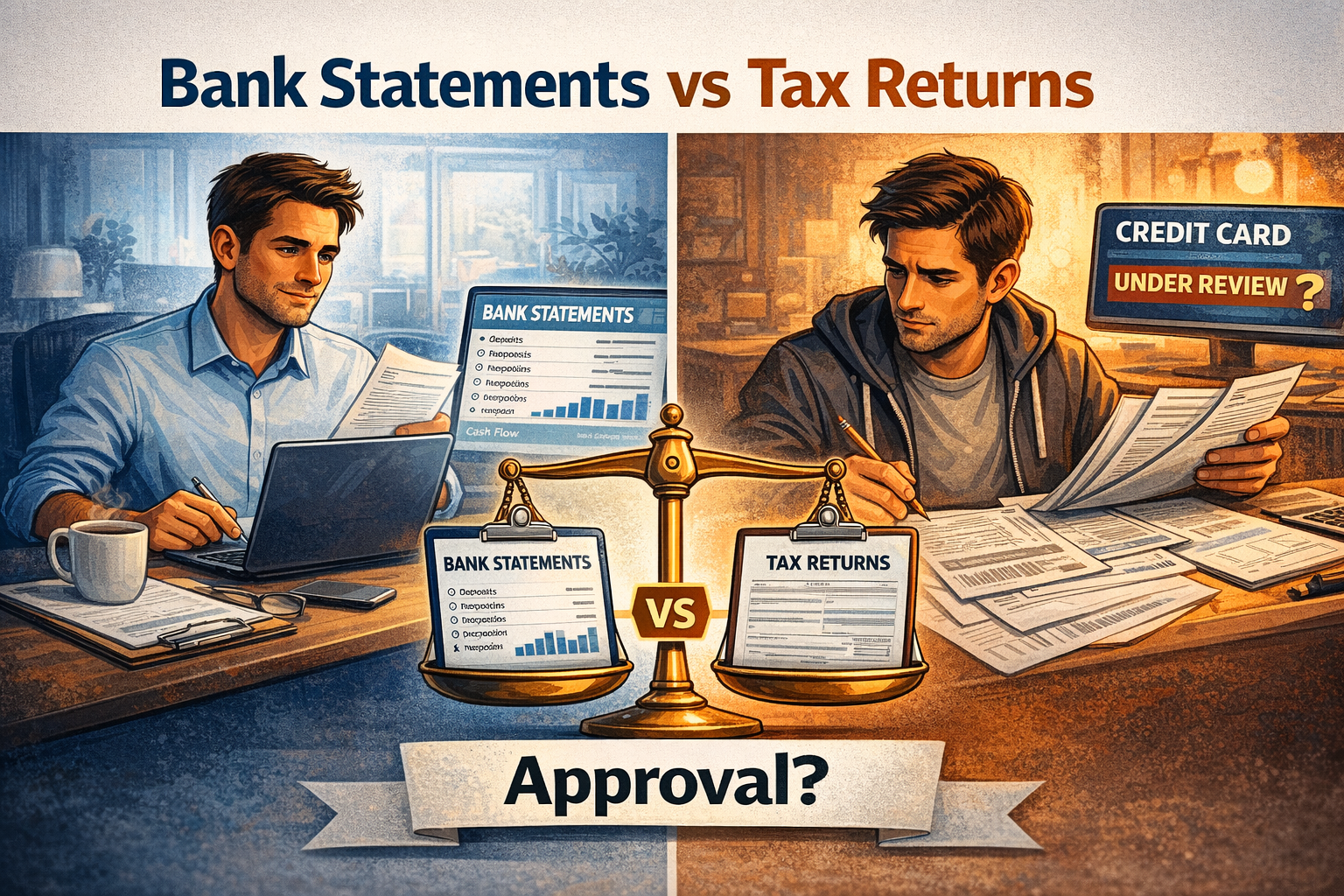
bank statements vs tax returns credit card approval comparison showing income verification and approval decision

When you apply for a new credit card, it is easy to focus only on your credit score and ignore the income box on the application. Your credit score describes how you have handled debt in the past, but your income tells a lender whether you can realistically handle more debt right now. Lenders look at your earnings to decide how high a credit limit you can manage without overextending yourself, and in some cases, whether they will approve you at all.
How Debt-to-Income Ratio Affect Credit Card Approval and Your Credit Limit (2026 Guide)

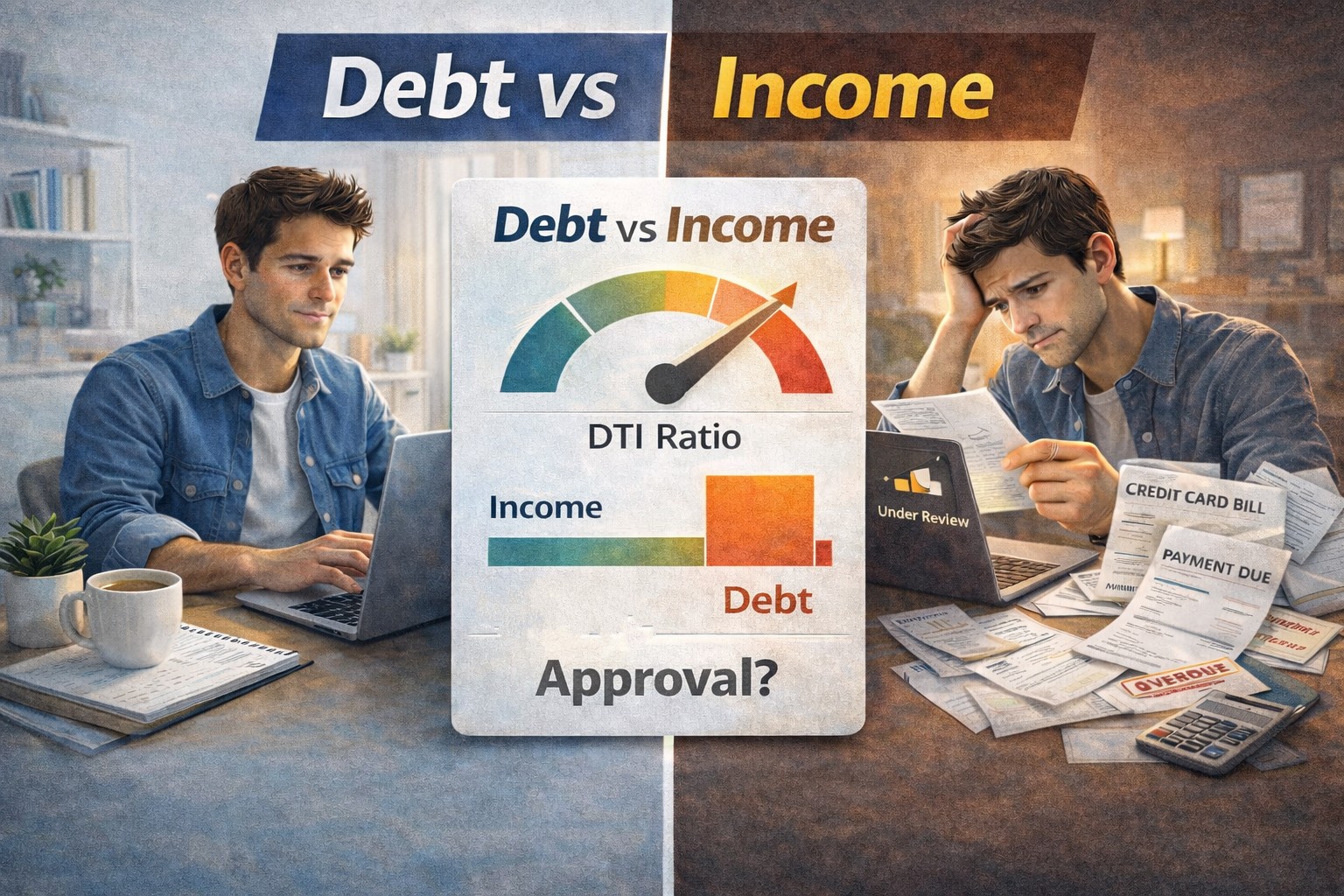
debt-to-income ratio affect credit card approval illustration showing income vs debt comparison and DTI ratio risk meter

Debt-to-income ratio affect credit card approval decisions because lenders evaluate how much of your income is already committed to existing debt payments. When people apply for a new credit card, they tend to focus on credit scores and payment history. Yet many lenders also look closely at a simple number called the debt-to-income ratio (DTI), which compares monthly debt payments to gross monthly income. This ratio helps lenders judge how much additional debt an applicant can realistically handle.