
How Debt-to-Income Ratio Affect Credit Card Approval and Your Credit Limit (2026 Guide)
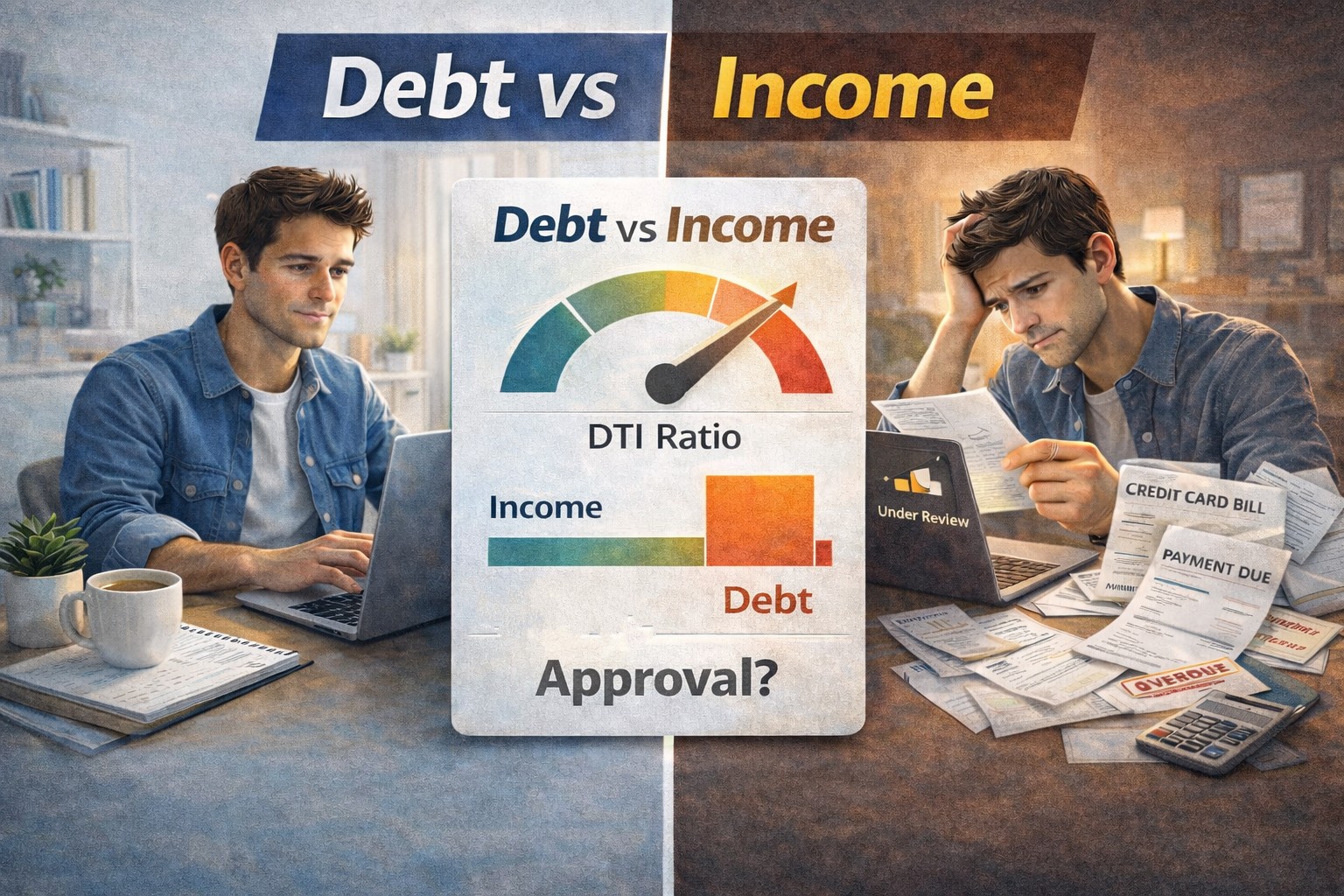
debt-to-income ratio affect credit card approval illustration showing income vs debt comparison and DTI ratio risk meter

Debt-to-income ratio affect credit card approval decisions because lenders evaluate how much of your income is already committed to existing debt payments. When people apply for a new credit card, they tend to focus on credit scores and payment history. Yet many lenders also look closely at a simple number called the debt-to-income ratio (DTI), which compares monthly debt payments to gross monthly income. This ratio helps lenders judge how much additional debt an applicant can realistically handle.

Secured Credit Cards for Gig Workers: Are They a Smart Option in 2026?

Secured credit cards for gig workers illustrated with a delivery driver reviewing finances and considering a secured credit card option.

Many gig workers find that getting approved for a traditional unsecured credit card is harder than expected, even when they are working full time and earning a reasonable amount overall. Lenders are often set up to evaluate people with steady paychecks and predictable pay periods, not drivers, delivery workers, or freelancers whose earnings can swing from week to week. This mismatch can lead to confusing denials or low credit limits, even when the applicant feels their income is strong over the course of the month.